
A Realistic 5 Days in Kyoto Itinerary for Your First Japan Trip
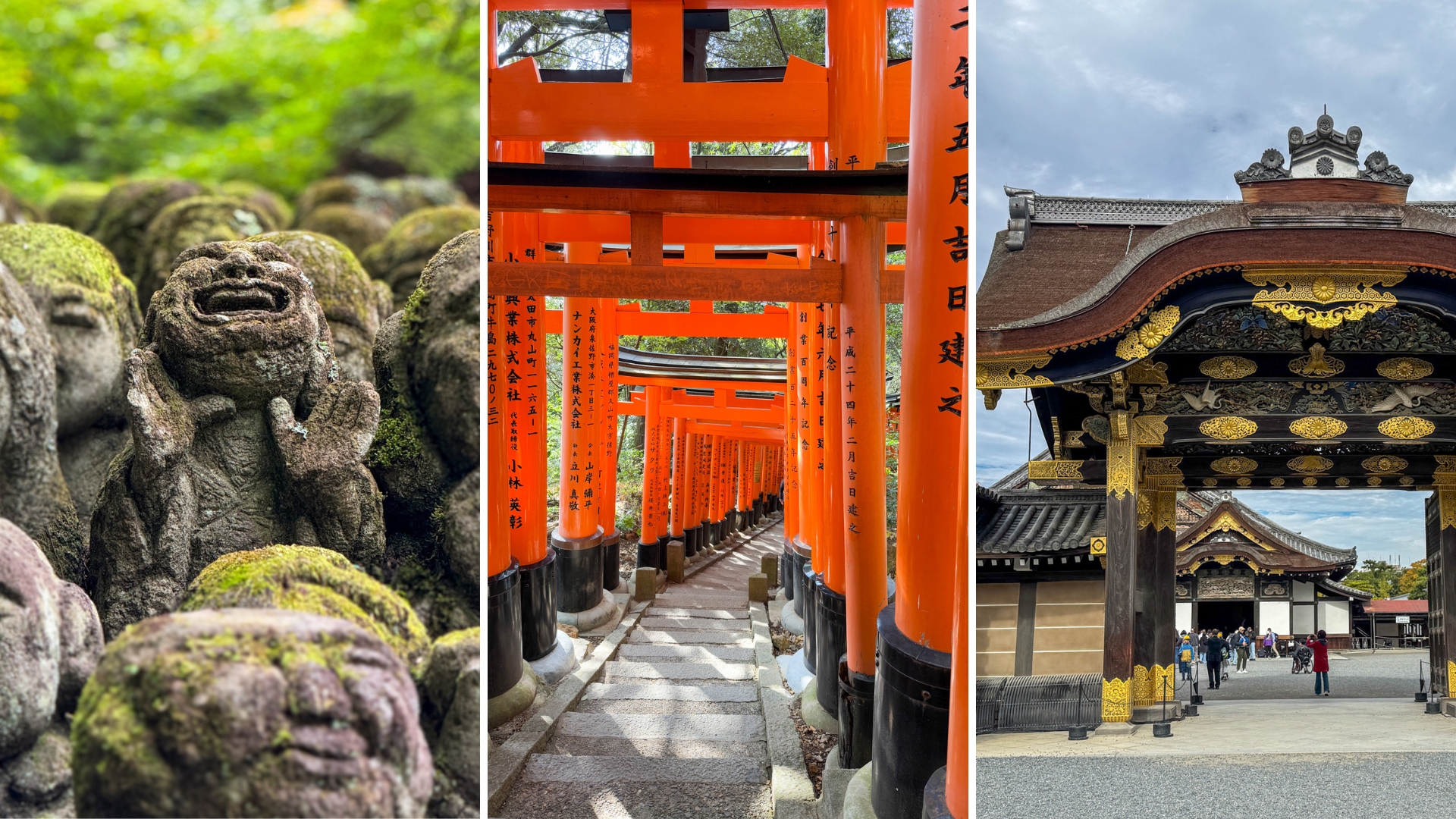
If you're planning your first trip to Japan, there's a very high likelihood that you'll be heading to Kyoto. In fact, I'd almost guarantee that it's going to be on your must-visit list, as Kyoto is one of the most popular cities to visit in Japan (probably second only to Tokyo). And for good reason!
Kyoto was Japan's imperial capital for more than 1,000 years, and is therefore the cultural and historical heart of the country. It has a fascinating blend of historic and modern elements, and feels completely different from Tokyo and nearby Osaka.
Kyoto is known for its endless number of classical temples and shrines; its traditional wooden architecture; geisha culture in multiple geisha districts; great food, matcha tea, and even a sake brewing district. And after visiting myself, I totally get the hype around Kyoto; it was easily my favorite city I visited in Japan!


A realistic 5-day Kyoto itinerary
You need to know this before you go to Kyoto: parts of it are definitely suffering from overtourism. Kyoto's most famous temples/shrines, its famous bamboo grove, its famous food market… they all get VERY busy and VERY crowded pretty much year-round.
When I say this is a “realistic” itinerary for Kyoto, here's what I mean: I'm not going to advocate for 5 a.m. wake up calls just to skip some crowds, because that's not how I personally travel. I'm also not going to tell you to skip the crowded spots altogether, because I know you want to see them.
What I AM going to do is give you realistic expectations and offer up a few alternative suggestions in case you do want to branch out a bit. I'm also going to say this: it's totally okay if you don't tick off every single “must-see” sight in Kyoto! There's nothing wrong with not doing it all.
Having said all that, here's my version of the perfect 5-day Kyoto trip, based on my own travels there and what I loved and/or would do differently next time.


Highlights of this itinerary include:
- Eating your way through Nishiki Market
- An up-close experience with a geisha or maiko
- Exploring Kiyomizu-dera temple
- Making your own ramen during a cooking class
- Touring Nijō Castle
- Hiking through the torii gates at Fushimi Inari
- Visiting less-popular temples in Arashiyama
- Seeing Yasaka Pagoda at night
- And more!
So let's go!
Day 1 in Kyoto: Arrival and a Kyoto intro
Highlights today include: Nishiki Market and a nighttime tour of Gion
1. Arrival to Kyoto
Suggested timing: Whatever works!
Today is going to be your arrival day. Most likely you'll be traveling from elsewhere in Japan (probably Tokyo), and most likely you'll be arriving via Shinkansen, or bullet train. I took a late morning train from Tokyo, meaning I arrived in Kyoto mid-afternoon.

Once you arrive, it's time to make your way to your hotel. Most people stay either in Downtown Kyoto or Higashiyama (where Gion is), though you might also opt for something closer to Kyoto Station. (I'll talk more about specific hotel suggestions later in this post!)
You have several options for getting around in Kyoto, which is a much smaller city than Tokyo, but is nevertheless really spread out. Kyoto does not have as robust of a train/metro system as Tokyo, but you still might be able to get to your hotel via metro from Kyoto Station. Or you can grab a taxi to get there, which might be more convenient with your luggage.
Good to know: Uber DOES work in Japan, but traditional rideshares don't really exist here; if you use Uber or another similar app, you're still going to be sent a taxi! The most popular ride-hailing app in Japan is actually called GO, and it's the one I downloaded and used in Kyoto. It has an English interface and is easy to use — though note that you will get charged a fee of about 200 yen ($1.25 USD) for using the app as a non-Japanese person. It works the same as every other ride-sharing app.
Depending on what time you arrive in Kyoto, you might be able to check into your hotel room and have some time to settle in. (Or, if it's too early for you to get into your room, you can still drop your bags off for them to hold until later.)
Then it's time to head out and start exploring a bit of Kyoto! Head into Downtown Kyoto for your first stop.
2. Nishiki Market
Suggested timing: 4 or 5 p.m. (ish)
I recommend heading to Nishiki Market in the late afternoon for either a late DIY progressive lunch, or an early DIY progressive dinner.


This is Kyoto's famous food market, and while it's known for being very crowded during the morning hours and at lunchtime, many stalls are open until 6 (or slightly later), and I didn't find it to be crowded at all in the late afternoon/early evening.
This market covers a staggering 5 blocks, and you can try everything here from tempura to takoyaki to gyoza to taiyaki and so much more. “Street food” in Japan is generally really safe due to high food safety standards, so take your time and try as much as you'd like!
3. Gion geisha tour
Suggested timing: 7 p.m.
For this evening, I recommend booking a walking tour in Gion in order to learn a bit more about Kyoto's geisha culture and traditions, which date back to the 1700s. Gion is home to two distinct geisha districts that can be very crowded during the day, but tend to be quieter in the evenings.

This is the geisha-focused walking tour I recommend, which meets up near Pontocho Alley. You'll stroll through the streets of Gion learning about Kyoto's five separate hanamachi, or geisha districts, where geishas (or geikos, as they are known in Kyoto) and apprentice maikos live and work. You'll walk along the Shirakawa Canal, cross Tatsumi Bridge, and end at Yasaka Shrine, which is open 24 hours.
Sometimes you might even spot geiko/maiko on their way to work in the evening, though it's not ever guaranteed (and if you see any, it's not polite to bother them or take photos).
I learned so much on this tour, and it's offered at several starting times throughout the evening. Book this tour here.


After the tour, you can walk back toward the Kamo River and either head back to your hotel, or perhaps explore some of Kyoto's nightlife. If you're looking for a nightcap, check out Music Bar Beatle Momo for good cocktails.
RELATED: My Favorite Tours to Take in Kyoto, Japan
Day 2 in Kyoto: Castles, ramen, and a famous temple
Highlights today include: Visiting a castle, a ramen cooking class, visiting Kiyomizu-dera temple, and seeing Yasaka Pagoda at night
Enjoy breakfast at your hotel this morning before heading out for a busy day! I'm *not* going to tell you to get started at 5 a.m. this morning; you do you! (I started most of my days in Kyoto between 8 and 9 a.m.)
1a. Castle adventure
Suggested timing: 10 a.m.
This morning you have a few points of interest to choose from. If you want to visit a castle, you can choose between the Kyoto Imperial Palace (and the Kyoto Gyoen National Garden) and Nijō Castle. The Imperial Palace is actually more known for its garden, so I personally recommend Nijō Castle out of the two.


Nijō Castle dates back to the early 1600s, when it was built by Tokugawa Ieyasu, the founder of the Tokugawa shogunate. Japan was an Imperial empire in those days where the emperor was the head of the country, but the shogun (the head of Japan's military and its samurai class) actually held all the political power.
You can book a guided tour of Nijō Castle to learn all about the delicate (and often dramatic) relationship between emperor and shogun in Kyoto — I booked this 90-minute guided tour and would recommend it — which includes entrance into Ninomaru Palace, plus a guided walk through the castle grounds.
Another cool aspect of Nijō Castle is the fact that you get to walk across its uguisubari or “nightingale floors.” These floors make a distinct chirping sound when you walk on them, like the sound of birdsong. Legend has it that the shogun had these special floors installed to make it harder for ninja assassins to sneak up on him, and I was geeking out over walking across real ones.

1b. Golden Pavilion
Suggested timing: 10 a.m.
If you're not really that interested in Japanese imperial history, you might want to skip the palaces/castles altogether (though I personally think you should visit at least one, considering they're part of a UNESCO World Heritage Site recognizing the “Historic Monuments of Ancient Kyoto”). If this is the case, then I'd start your morning at Kinkaku-ji, or the Golden Pavilion.
The Golden Pavilion was originally built as a retirement retreat for the shogun around 1400, but eventually became a Zen temple. It gets its nickname from the fact that the top two floors are completely covered in gold leaf. Just note, though, that the original building has burned down several times; the current one was reconstructed in 1955.
Visiting Kinkaku-ji doesn't always take a lot of time (especially if it's crowded when you get there), so you may also want to include a visit to nearby Ryōan-ji, which is a Bhuddist temple with a famous Zen rock garden.
(I opted to visit Nijo Castle, so I didn't make it to the Golden Pavilion. Which is fine; it's okay if you don't see every single thing in this post!)
A note on maps in Kyoto: if you're using Google Maps to get around (which I highly recommend!), you're going to see a curious symbol popping up a lot. It looks like a Nazi swastika — and it is, kind of. This symbol in Japan is known as manji, and it's an ancient symbol representing good fortune and prosperity. The symbol is associated with Buddhism in many Asian nations, and in Japan the manji is used on maps (including Google Maps) to mark the location of Buddhist temples. The symbol has been used around the world for centuries as a symbol of peace, and it was actually the Nazis who co-opted it for evil. So don't be too alarmed when you see these symbols all over your map! Learn more things to know about traveling in Japan.
2. Ramen cooking class
Suggested timing: 1 p.m.
Japan is well known for its noodles, and its ramen in particular. But why sit down at a noodle counter when you can hand-make those noodles yourself and then eat them for lunch??

For lunch today, book yourself a ramen cooking class at the Ramen Factory. I booked this ramen cooking class through Viator, and while it's a pricey bowl of ramen in the end, the whole experience was so much fun.
This 90-minute class is appropriate for everyone, from people who aren't very good cooks (hi, it's me) to families — there were even a couple kids in my class! The classes are in English, too, in case you're worried about that.
You'll create a customized bowl of ramen from start to finish, right down to making your own noodles from scratch and blending your own perfect broth. And then you can take the recipe home and know how to make a tasty bowl of ramen!

3. Kiyomizu-dera
Suggested timing: 3 p.m.
After lunch, catch a taxi to Kiyomizu-dera temple, one of Kyoto's most famous temples. (Note that taxis will most likely drop you off at the base of the hill near the temple entrance, so you'll have to do a bit of walking!)
This Buddhist temple dates back to the year 780 and is known for the wooden stage that extends from the main hall above a nearby hillside, offering up excellent views of the surrounding trees and Kyoto city in the distance.
The name of this temple translates to “Pure Water Temple,” and the small Otowa Waterfall still flows into a pool at the base of Kiyomizu-dera's main hall. There are 3 streams of water that you can dip a cup into and drink from, with each stream said to bring luck in a different aspect of life — but note that it's considered greedy to drink from all 3!
This temple will be crowded in the afternoon, but it's honestly crowded at all times of day unless you get up and go right when it opens at 6 a.m. Just prep yourself for the crowds and spend some time enjoying the temple complex; there's a lot of space here, and not every corner will be busy.
4. Sannenzaka/Ninenzaka
Suggested timing: 5 p.m.
From Kiyomizu-dera, you can walk downhill along Matsubara Street into the Sannenzaka and Ninenzaka shopping areas. This part of Kyoto is filled with cafes, bakeries, tourist shops, and traditional buildings. It's usually very crowded in the afternoon, but should be starting to calm down the closer it gets to 6 p.m. since many of the shops around here close by 6:30 p.m.
You can grab an ice cream, mochi, or matcha (GOKAGO is a famous viral matcha shop), or simply stroll and browse and take photos before heading to dinner.
5. Dinner
Suggested timing: Between 6 and 7 p.m.
I would have dinner in this same area for tonight for convenience's sake. Some spots to consider include Kyo no Ajitokoro Uemura (for tempura; it's cash-only), Itsukichaya at Kiyomizu (you can book a table online), Masaichi (for multi-course, seasonal menus), or KURODOH (for upsacle multi-course meals).
6. Yasaka Pagoda
Suggested timing: 8-9 p.m.

After dinner, you'll be able to walk to see Hōkan-ji Temple (Yasaka Pagoda) after dark. The street leading to this famous pagoda is usually packed from 8 a.m. to sunset, but I found that it was very quiet after dark. (Photo above taken around 9 p.m.!)
Plus, you'll get to go home with more unique photos than everyone who rushes here in the morning!
Day 3 in Kyoto: Arashiyama and meet a geisha
Highlights today include: Lesser-visited temples in Arashiyama like Otagi Nenbutsuji and Adashino Nenbutsuji, bamboo forests, and an intimate geisha show
Enjoy breakfast at your hotel again, and prep to head out sometime between 8 and 9 a.m.
1. Arashiyama temples
Suggested timing: 9 a.m.
You're headed to Arashiyama today, the historic district in the western outskirts of Kyoto that's known for its bamboo forests and temples. There are several ways to get here, including taking the JR line train to Saga-Arashiyama Station, or the Randen tram line to Arashiyama, both of which will take you to the central part of Arashiyama. I wanted to visit some temples further away first, though, so I actually took a taxi. The ride was under half an hour from central Kyoto.
I recommend starting your morning at Otagi Nenbutsuji Temple, a Buddhist temple on a hill with grounds filled with 1200+ whimsical stone statues. Every single statue bears a different expression, and exploring the temple and grounds here is absolutely delightful.


This temple is fairly small, so give yourself up to an hour. The statues here are NOT of Buddha, so it's fine to take as many photos of them as you'd like.
From there, it's a short (downhill) walk to Adashino Nenbutsuji Temple, another notable Buddhist temple that's even less-visited. This temple is very sacred, and is located in an area that has been used for funerary rights since ancient times. There are regular cemetery areas here, as well as a section of very tiny stone markers grouped together that are thought to represent people who died without any family.
Sections of this temple do have no photo signs, so please respect those.

Adashino Nenbutsuji also has a small bamboo grove (there are signs that will guide you to it), and this is an ideal spot to get your bamboo forest photos without the crushing crowds. The grove is small, but generally very peaceful.

2. Saga-Toriimoto Preserved Street
Suggested timing: 11 a.m.
From the temples you can follow Saga-Toriimoto, a preserved street with historical architecture and several cafes, some workshops/craft shops, and lots of smaller temples.
Being removed from the busiest part of Arashiyama, this area is pretty quiet. Stop for a coffee or matcha to gird yourself for the coming crowds!

3. Arashiyama main area
Suggested timing: 11:30 a.m.
Okay so here's the thing: the main part of Arashiyama is going to be jam-packed with people basically from like 7:30 a.m. through the afternoon. There are lots of very popular sites all packed into a relatively small area here, including the famous Arashiyama Bamboo Forest and Tenryu-ji Temple. There's also the Okochi Sanso Garden and the Arashiyama Park Observation Deck that looks down towards the Hozugawa River, and the Arashiyama Monkey Park across the river.
You'll maybe want to walk through the bamboo forest just to see it (and perhaps be thankful that you visited the bamboo grove at Adashino Nenbutsuji earlier), but the rest of the stops are up to you. The view from the observation deck is worth seeing, and the Okochi Sanso Garden is beautiful, especially in the fall.

I personally skipped Tenryu-ji Temple (it was SO crowded), and you couldn't pay me money to walk up a “monkey mountain.” But if you have any interest in any of these sites (or any of the other myriad temples/shrines around here), you'll have time to visit them.
4. Lunch in Arashiyama
Suggested timing: 12:30 or 1 p.m.
You can get lunch in Arashiyama if you don't mind wading through the crowds. Gyukatsu Kyoto Katsugyu Arashiyama is a highly recommended option (it's a spot where you cook your own meat on a hot stone), but if you can't get a table, my favorite spot ended up being a little food truck called Onigiri Ranma where they make fresh onigiri to-order.

You could also head back into Kyoto and have a konbini lunch (AKA grabbing food from a convenience store like 7-11, Lawson, or Family Mart). Konbini food is actually excellent, and it's fun to try all the different things you find on the shelf.
5. Geisha experience
Suggested timing: 3 or 4 p.m.
You *may* get lucky enough to spot a maiko or geiko “in the wild” in any of the geisha districts in Kyoto, but you're highly discouraged from bothering them on the street or even snapping photos in most cases. If you want to feel less like a paparazzi, the good news is that there are several tours you can book to learn more about these interesting women in a way that's more educational, consensual, and culturally rich.
If this is something you're interested in, I highly recommend booking this “1 Hour Geisha Show” in Kyoto. It ended up being one of my favorite things I did in Japan!


The tour I booked has a few different versions all run by the same company, but I specifically recommend the “1 Hour Show in Tea House” tour (once you choose your date and number of guests, you can see the different tour options). In this version of the tour, you'll go to a tea house on Kamishichiken Street, which is the oldest hanamachi (geiko district) in Kyoto.
During this tour you'll most likely meet a maiko (apprentice geisha), which is actually good, as they are the ones with the more elaborate kimonos and hair decorations. You'll get to learn a bit about maiko and geiko and their different attire and lifestyles, and the maiko will perform a couple dances and then sit down for a Q&A session.
The tea house version of this tour also included a walk with our maiko friend over to Kitano Tenmangu Shrine, an absolutely stunning Shinto shrine that's definitely off the tourist trail.


This is such a fascinating way to learn more about the geisha tradition in Japan, and I can't say enough good things about this tour.
Again, this is the tour I booked — though note that the tea house version needs to be booked well in advance!
6. Free evening in Kyoto
Suggested timing: 7 p.m.
I opted for a chill evening this night after two very busy days in Kyoto (this was my konbini dinner night). But you do you!
You could head to Kyoto Shinkyogoku Shopping St for some shopping, claw machines, and dinner (I had a great meal at Katsukura Tonkatsu Sanjo Main here).

OR perhaps you'd like to book dinner and a show at Kyoto's Sumo Show Experience, where you can watch some (exhibition) sumo wrestling and try a hot pot dinner. This experience is touristy, sure, but it's also lots of fun!
Day 4 in Kyoto: Endless torii gates
Highlights today include: Fushimi Inari shrine and optional sake tastings
Start out with a good breakfast this morning, as you'll need your energy!
1. Fushimi Inari
Suggested timing: 8 or 9 a.m.
Today we're heading a little south of central Kyoto to Inari, to the famous shrine with 10,000 vermillion torii gates snaking up a mountain like dragon scales. You can get to this shrine by public transit (take a JR train to Inari Station, or the Keihan Line to Fushimi-Inari Station), or by taking a taxi.
You'll walk through a giant gate to enter the Fushimi Inari shrine complex — and around 9 a.m. (which is when I arrived), it's going to be absolutely swarming with people.

Many (I'd actually guess most) people come to Fushimi Inari for less than an hour. They take their photos at the entrance, and then they walk a little ways up the main path of torii gates before continuing on with their day. And that's fine! But I highly, highly recommend coming prepared to hike today so you can see the majority of those 10,000 torii gates!
The easiest way to conquer Mt. Inari is to just follow the main path up. This path will be very crowded towards the bottom of the mountain, but it thins out considerably the higher you go. If you climb past the Mt. Inari Crossroads, you likely will have large stretches of path completely to yourself regardless of the time of day you visit.


There's also the option to hike the “back way” up the mountain, where you veer off the main path after the Okusha Worship Center and then climb to the top through quiet bamboo groves and past moss-covered forest shrines. Once you reach the top, you can then walk back down through all the torii gates.
If you want to get to the top of Mt. Inari, it definitely does require a good hike and a time commitment (at least 3 hours, but possibly longer depending on how often you stop), but it's very much worth it!

RELATED: How to Hike the “Secret Back Way Trail” Up Fushimi Inari
2. Lunch in Inari
Suggested timing: 1 p.m. (ish)
I would plan to get lunch in Inari after your hike. There are several options near the train station and shrine entrance, including usually some street food stalls if you just want something quick.

3a. Sake district
Suggested timing: 3 p.m.
Since you've spent the morning at a pretty busy spot, how about heading somewhere more off-the-beaten path this afternoon? Kyoto has a whole sake district not far from Fushimi Inari where you can learn all about sake brewing — and taste some, of course!
This “Insider” Sake Brewery Tour would be my pick for this afternoon. It's 3 hours long, yes, but includes a visit to the Gekkeikan Okura Sake Museum, plus a guided sake tasting with snack pairings. If you're curious about sake at all, this is an excellent option, and not something that most people do in Kyoto.
3b. Something else!
There are lots more things to see and do in Kyoto, and there might be something on your to-do list that I haven't mentioned here. So this is the perfect time to fit that in! (And let me know what it is so I can check it out myself next time.)
4. Dinner in Kyoto
Suggested timing: 7 p.m.
If you didn't go check out Shinkyogoku Shopping St last night, I'd recommend doing that tonight. There are lots of shops and restaurants here to explore — again, I had a great meal at Katsukura Tonkatsu Sanjo Main.

And if you did go there last night, then tonight is free for you to find a restaurant of your choosing.
Day 5 in Kyoto: Day trip time!
Today is your chance to take a day trip from Kyoto. Kyoto is really close to lots of popular spots, and many of them can be explored in a day or even half a day.
The top three day trips I would recommend include:
Day trip to Nara
You've likely heard of Nara and its deer that will “bow” to you for a treat, but that's not the only reason to take a day trip to Nara. Along with visiting the famous deer in Nara Park, you can also see the Daibutsu (Great Buddha) at Todai-ji Temple, see thousands of lanterns at Kasuga Taisha Shrine, and visit the famous mochi shop Nakatanidou.
You can reach Nara via train from Kyoto in about half an hour.
Day trip to Uji
Uji is another city near Kyoto that makes for a great day trip from Kyoto. Uji is home to Japan's best matcha, so it's a matcha-lover's dream! Along with drinking and shopping for matcha in Uji, you can also check out the Nintendo Museum and visit the beautiful Byodo-in Temple.
You can reach Uji via train from Kyoto in 20-25 minutes.
Day trip to Osaka
And, if you're not planning to spend time in Osaka separately, you can absolutely take a day trip here from Kyoto. The top thing to do in Osaka is to go on a food tour like this one. You can also check out Osaka Castle, and stick around after dark to see the neon lights of the Dotonbori district. Universal Studios Japan is also located in Osaka in case you want to have a theme park day.
You can reach Osaka via train from Kyoto in 20 minutes on the bullet train or 40 minutes on a regular train.
Where to stay in Kyoto
There are LOTS of hotels and ryokans to choose from in Kyoto to suit every style and budget.
I stayed at Tomoya Residence Hotel Kyōto, located in the Nakagyo Ward just north of downtown and within a short walk from Karasuma Oike Station (which both of Kyoto's subway lines run through). This is an apartment-style hotel with huge rooms and the kindest staff. The rooms have a simple Japanese design but more Western-style amenities like very comfy beds and even a washer and dryer in-room. You can get breakfast (either Western or Japanese) delivered to your room each morning, and I would highly recommend it!

Some other hotels that I researched and would happily book in Kyoto include:
- The Gate Hotel Kyoto Takasegawa – A beautiful hotel in central Kyoto not far from Gion.
- The Royal Park Hotel Iconic Kyoto – A 5-star modern hotel also near Karasuma Oike Station.
- Cross Hotel Kyoto – Another central hotel with warm, wooden design in the rooms.
- Kyoto Granbell Hotel – A modern hotel just on the edge of Gion with an onsen for guests.
- Good Nature Hotel Kyoto – Near the Kamo River, this hotel has its own courtyard garden.
- Rinn Gion Shirakawa – A small hotel with large rooms near Gion Shijo Station.
When to visit Kyoto
Kyoto is one of the main places in Japan currently suffering from overtourism, so you're likely to run into tourists no matter when you go. But some times of year are inherently more busy than others. The busiest times in the city are in the spring during cherry blossom season (usually mid-March-mid-April), during Golden Week (late April-early May), and in the fall for fall foliage (November-December).

Conversely, the quietest times in Kyoto are the summer months (especially July and August) when the weather is extremely hot and humid with quite a bit of rain, and during the winter (January-February) when it's chilly.
If you want to balance good weather with smaller crowds, ideal times to go to Kyoto are early-mid March, most of May, and October. I visited Kyoto in mid-November, and while it WAS very crowded in spots, there are certainly ways to avoid the people and still very much enjoy this beautiful city.
READ NEXT: What to Wear in Japan: A Japan Packing List You Can Use
Are you ready to plan your trip to Kyoto? What are you most looking forward to seeing/doing there?

Amanda Williams is the award-winning blogger behind A Dangerous Business Travel Blog. She has traveled to more than 60 countries on 6 continents from her home base in Ohio, specializing in experiential and thoughtful travel through the US, Europe, and rest of the world. Amanda only shares tips based on her personal experiences and places she's actually traveled!









“Such a helpful guide for a first trip to Kyoto! Adding the ramen class and nighttime Gion tour to my list. Thanks for keeping expectations so realistic!
This itinerary feels practical and well-balanced, especially the focus on enjoying Kyoto without rushing through every major attraction.
I tried my best to make it replicable, but not too overwhelming. I loved my time in Kyoto!
This itinerary is exactly what I was looking for! The day-by-day plan makes Kyoto feel much easier to explore. Thanks for sharing such helpful tips.